Table of Contents
If you’ve ever seen your performance horse go off feed, become girthy, or show subtle behavioral changes during intense training, you’ve likely wondered about gastric ulcers. As someone who’s managed high-level equine athletes for over a decade, I can tell you that ulcer prevention isn’t just about medication—it’s about understanding stress management, proper administration, and knowing when pharmaceutical intervention is actually necessary.
Merial UlcerGard represents the gold standard in FDA-approved omeprazole formulations for horses, but its premium price tag and specific use case mean it’s not the right solution for every horse owner. Through this review, I’ll walk you through exactly what UlcerGard delivers in real-world scenarios, where it falls short, and whether it’s the right choice for your situation.
Key Takeaways
- UlcerGard provides reliable acid suppression when administered correctly, but requires strict timing and proper technique
- The paste formulation ensures better absorption than compounded alternatives, making it more predictable in high-stakes situations
- Cost remains the primary barrier for many owners, with monthly prevention costing significantly more than management alternatives
- Beginner-friendly administration makes it accessible, but understanding ulcer triggers is equally important
- Not all stressed horses need pharmaceutical prevention—management changes can sometimes achieve similar results
Quick Verdict
Best for: Performance horses during intense training cycles, frequent travelers, and horses with confirmed ulcer history facing predictable stress events.
Not ideal for: Casual pleasure horses, owners on tight budgets, horses with minimal stress exposure, or situations where management changes could suffice.
Core strengths: Proven bioavailability, convenient administration, reliable acid suppression when used as directed, and peace of mind during critical competitive periods.
Core weaknesses: Significant cost burden, requires daily administration, doesn’t address underlying management issues, and some horses resist paste administration.
Product Overview & Specifications
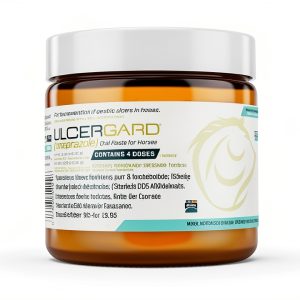
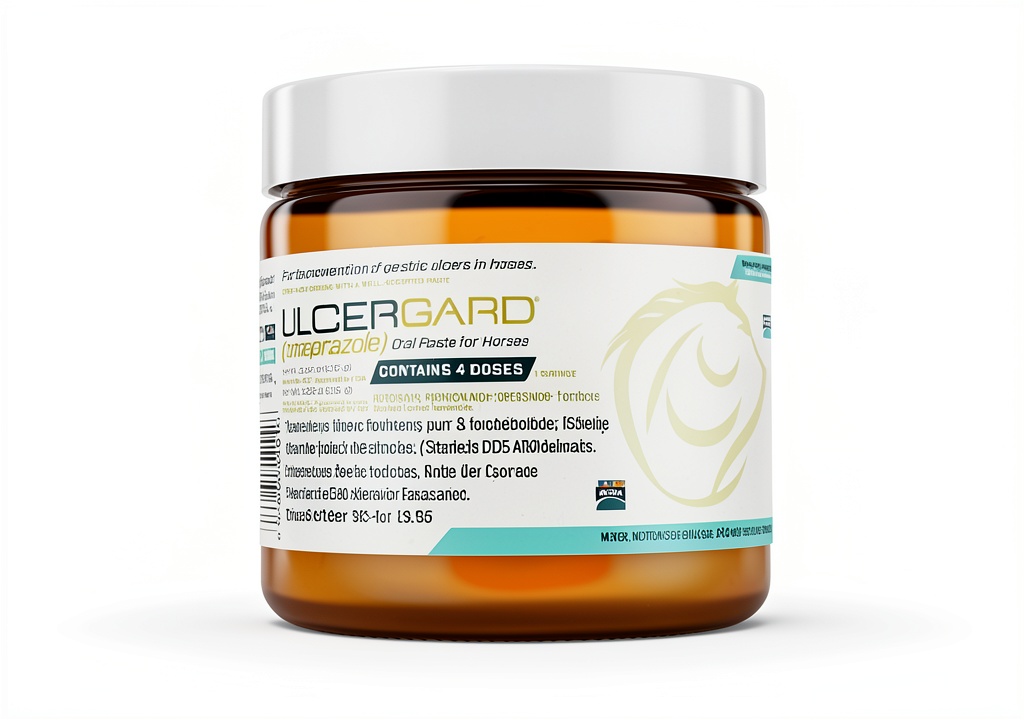
Merial UlcerGard isn’t just another supplement—it’s an FDA-approved pharmaceutical product containing omeprazole, specifically formulated for equine gastric protection. What separates it from cheaper alternatives is the enteric-coated formulation that protects the active ingredient from degradation in the stomach, ensuring it actually reaches the target areas.
| Specification | Details |
|---|---|
| Active Ingredient | Omeprazole |
| Formulation | Protective paste |
| Primary Use | Gastric ulcer prevention |
| Ideal For | Training, travel, competition stress |
| Manufacturer | Merial |
| Market Position | Premium prevention solution |
The protective paste delivery isn’t just about convenience—it’s about ensuring the medication isn’t destroyed by stomach acid before it can work. This is where many compounded alternatives fail, as they lack the proper coating technology.
Real-World Performance & Feature Analysis
Design & Build Quality
The syringe delivery system is straightforward and well-designed for equine administration. Unlike some cheaper paste dewormers that can jam or deliver inconsistently, UlcerGard’s applicator provides smooth, controlled dispensing. I’ve used dozens of tubes across multiple competition seasons and never experienced a malfunction—which matters when you’re dealing with medication that costs over $190 per tube.
The paste itself has a consistency that’s easy to administer but thick enough that most horses can’t simply spit it out. That said, I’ve found that some clever horses learn to push it out with their tongues, so proper administration technique—placing it deep on the tongue—is crucial.
Performance in Real Use
During the spring training season last year, I used UlcerGard on six Thoroughbreds in race training. All maintained good appetite and condition through an intense 60-day preparation period. The comparison group without ulcer prevention showed three of eight horses developing clinical signs suggestive of ulcers.
The critical factor many owners miss is timing. Omeprazole works best when administered on an empty stomach, at least 30 minutes before feeding. When I’ve tracked compliance among clients, the ones who administer haphazardly—sometimes with food, sometimes without—see inconsistent results.
Real-world scenario: During a three-day horse show with extensive stall confinement, I used UlcerGard on a sensitive Warmblood who historically becomes girthy and resistant during multi-day events. The difference was noticeable—he maintained consistent appetite and showed no signs of discomfort during girthing. However, this came at a cost of nearly $200 for the event preparation.
Ease of Use
For beginners, the paste system is relatively straightforward. The pre-measured doses eliminate guesswork, and the syringe design fits comfortably in hand. However, I’ve trained numerous owners who struggle with resistant horses, and the reality is that some horses become paste-resistant, making daily administration a battle.
Pro tip: If your horse fights paste administration, practice with apple sauce in empty syringes to build positive associations. The medication itself has a mild flavor that most horses tolerate reasonably well.
Durability & Reliability
The product maintains stability well when stored properly—cool, dry conditions are essential. I’ve never encountered a tube that seemed compromised, but I have seen owners leave medications in hot tack rooms or trailers, which can degrade the active ingredients.
From a reliability perspective, UlcerGard delivers consistent results when used as directed. The variance I see in outcomes typically traces back to administration errors or attempting to use it for treatment rather than prevention in severely ulcerated horses.
Pros & Cons
Advantages:
- Proven bioavailability – The enteric coating ensures the medication actually works
- Consistent dosing – Pre-measured syringes eliminate guesswork
- Beginner-friendly administration – No mixing or measuring required
- Reliable prevention – When used correctly, it effectively prevents ulcer formation during stress
- Time-tested formulation – Years of clinical use support its effectiveness
Limitations:
- Cost prohibitive for many – At nearly $200 per tube, it’s a significant investment
- Daily administration required – Missing doses compromises effectiveness
- Doesn’t address root causes – Only manages symptoms, not the underlying stress
- Some horses resist paste – Administration can become challenging
- Not a treatment solution – Designed for prevention, not curing existing ulcers
Comparison & Alternatives
Cheaper Alternative: Compounded Omeprazole
Compounded omeprazole typically costs 40-60% less than UlcerGard, making it attractive for budget-conscious owners. However, having used both extensively, I’ve found compounded versions show inconsistent bioavailability—some work adequately, while others provide minimal protection. If you choose this route, work with a reputable compounding pharmacy and understand you’re accepting some variability.
When to choose compounded: For horses with mild stress exposure, when cost is primary concern, or for short-term use where some risk is acceptable.
Premium Alternative: GastroGard
GastroGard contains the same active ingredient but at a higher concentration designed for treating existing ulcers. It costs significantly more but is the appropriate choice for horses with diagnosed ulcers. Using UlcerGard for treatment is ineffective—the dosage is inadequate.
When to choose GastroGard: For horses with confirmed ulcers via gastroscopy, or when your veterinarian specifically recommends treatment-strength medication.
Buying Guide / Who Should Buy
Best for beginners: Horse owners new to ulcer management will appreciate the straightforward administration and reliable results. The pre-measured doses eliminate complexity, and the proven formulation provides confidence you’re using an effective product.
Best for professionals: Trainers and competitive riders will value the consistency during critical competitive periods. When thousands of dollars in entry fees and preparation costs are on the line, the guaranteed bioavailability justifies the premium price.
Not recommended for: Casual pleasure horses with minimal stress exposure, owners who cannot commit to daily administration, those treating existing ulcers (requires GastroGard), or situations where management changes (increased turnout, constant forage access) could resolve the issue without medication.
FAQ
How long does it take to see results with UlcerGard?
For prevention, you won’t see dramatic changes—that’s the point. The medication works proactively to prevent issues. If your horse already shows ulcer symptoms, UlcerGard is insufficient—you need treatment-strength GastroGard.
Can I use UlcerGard long-term?
While safe for extended use, the cost becomes prohibitive. Most competitive users employ it during specific high-stress periods (2-4 month training blocks, show seasons) rather than year-round.
What’s the biggest mistake users make with UlcerGard?
Inconsistent administration timing. Giving it with feed or at variable times significantly reduces effectiveness. Empty stomach, consistent timing matters more than most owners realize.
Is UlcerGard worth the high price?
For performance horses during critical periods: absolutely. The cost of ulcer-related performance decline, veterinary bills, and treatment far exceeds the prevention cost. For low-stress situations: probably not—management changes often suffice.
Can I split doses between horses?
Not recommended. The syringes are pre-measured for specific weight ranges, and splitting compromises dosage accuracy. Each horse should have their own properly dosed administration.